



What can a school tell us about the kind of person its founders wanted to create? What happens when a new religion encounters an established spiritual world? How do communities preserve knowledge while navigating change?
Daraja Maarifa’s historical journeys around education, religion and spirituality bring these questions into the places where they can be explored. They offer an opportunity to look closely at institutions you may recognise while discovering histories that are less often discussed.
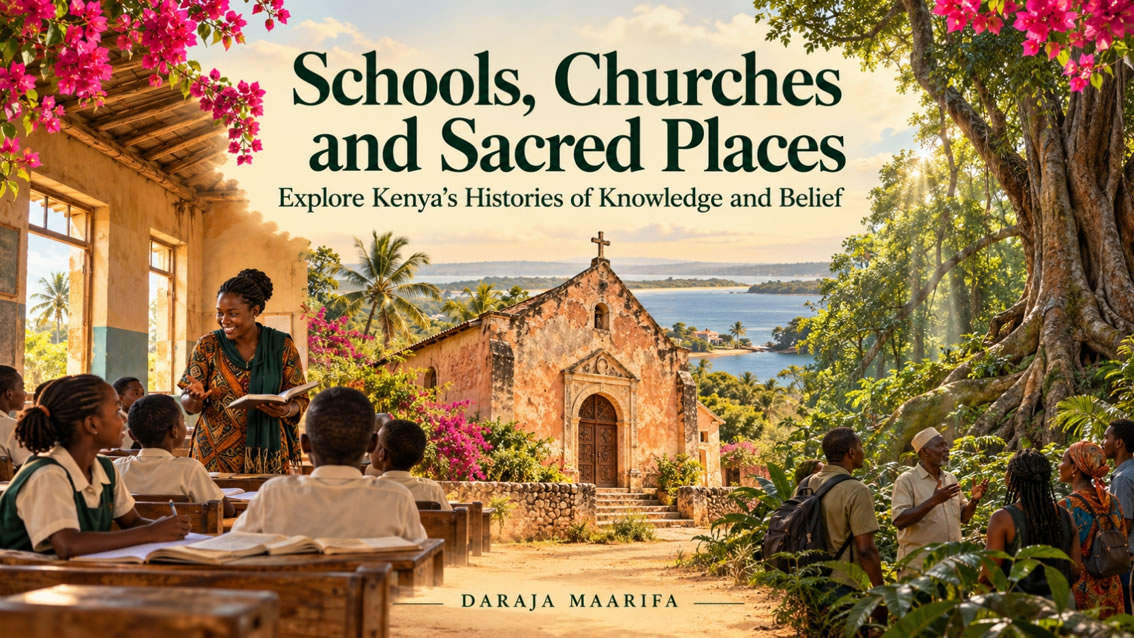
Explore the relationship between schooling and faith
Rabai in Kilifi County is one documented starting point. National Museums of Kenya records the establishment of a Church Mission Society station there and the construction of Saint Paul’s church in 1846. Its history opens a discussion about missionary activity, religious teaching and the development of schooling.
A journey around mission schools can also examine what pupils were expected to learn about work, family and their place in society. Research on Luhya girls and the Friends Africa Mission describes education intended to prepare girls for domestic roles. It also shows girls using the institutions to delay marriage and influence their choice of partner. Their actions are an essential part of the story.
Discover African educational initiatives
Our approach also follows the histories of education organised by African communities. Research into Gĩkũyũ independent schools documents songs through which pupils learned about land and independence. These accounts offer another perspective on schooling: education as a means of organising, remembering and imagining a different future.
Through these histories, participants can explore the relationship between education and identity, including the ideas people inherited, questioned and transformed.
Encounter the meaning of sacred landscapes
Spiritual knowledge also has places, practices and custodians. The Mijikenda Kaya forests are ancestral and sacred landscapes maintained by elders. National Museums of Kenya describes the connection between their spiritual significance and the protection of surrounding forest.
Journeys involving sacred places would be arranged according to custodians’ guidance and permissions. Where appropriate, participants could learn about the relationships between belief, community, land and cultural continuity.
This theme is suited to travellers, educators, diaspora groups and others interested in how knowledge and belief shape our understanding of ourselves.