



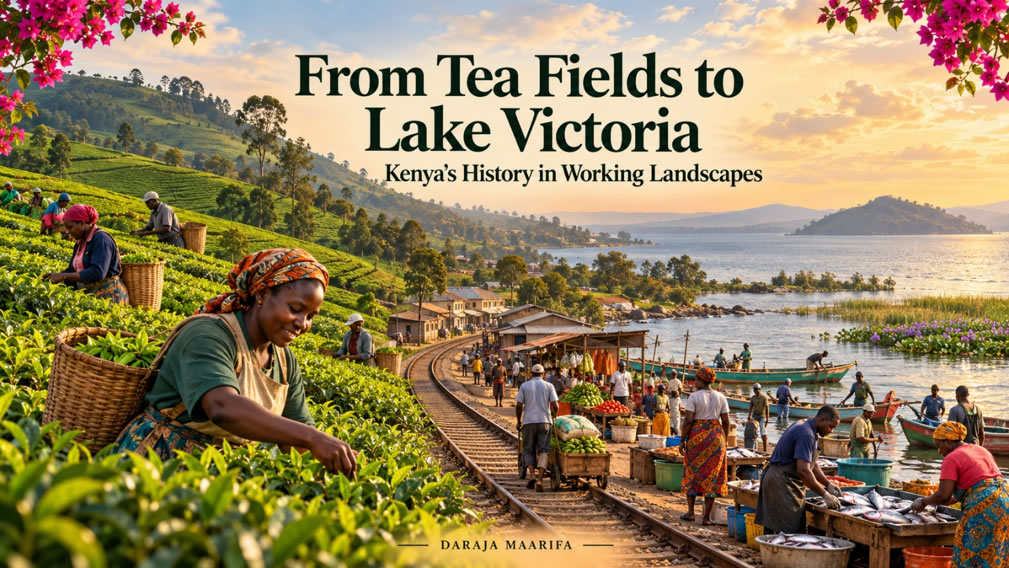
A cup of tea, a plate of fish and a train journey can become starting points for understanding Kenya’s history. Behind each are decisions about land, labour, movement and livelihoods.
Daraja Maarifa’s historical tours connect these everyday experiences with the landscapes that sustain them. Our developing journeys invite you to examine how places changed and how communities continue to live with, respond to and reshape those changes.
Look beyond the view of a plantation
A journey through a tea-growing landscape can explore more than the crop. It can examine who occupied the land, how farming changed, and how families became connected to estate work.
Historical research on Kipsigis agriculture documents the transformation of farming, livestock and labour under colonial rule. This provides a foundation for exploring agricultural history in the Kericho and Bomet region, alongside the particular histories and local knowledge of proposed stops.
These journeys create space to discuss the relationship between food production, commercial crops, ownership and the value placed on people’s work.
Understand Lake Victoria through ecology and livelihoods
Lake Victoria offers a different encounter with historical change. Research documents the effects of introduced Nile perch on native fish communities, while studies of water hyacinth trace its spread into the lake through the Kagera River. Pollution and other pressures also form part of the lake’s environmental history.
Our intended approach connects that ecological history with fishing, processing and trade. Women’s work is central to this conversation: research records their substantial participation in the fish economy and the inequalities affecting access to its more valuable activities.
A lakeshore journey can therefore bring together environmental questions and the human relationships surrounding a catch: who obtains it, who processes it, where it is sold and who benefits.
Follow the connections between places
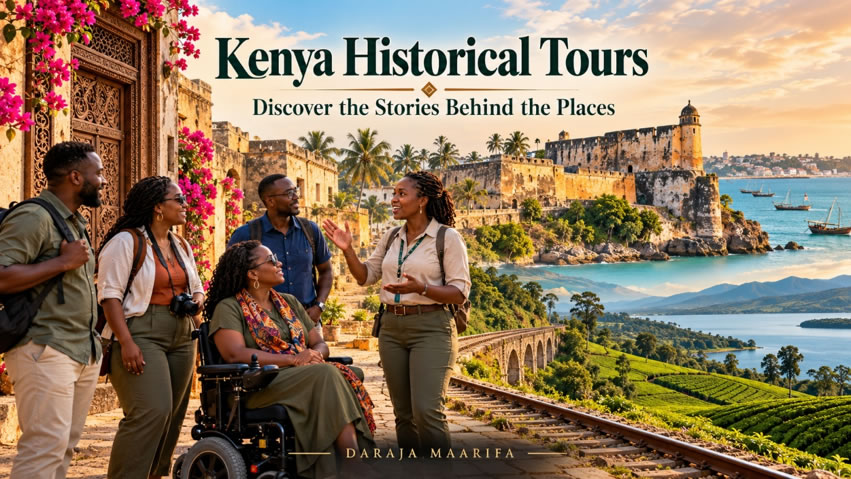
Roads and railways offer another way to explore these relationships. Research on Kenya’s colonial railway examines how its construction shaped settlement patterns that persisted over time. A route can help participants investigate why particular towns grew and how movement connected landscapes to markets.
These themes can be explored separately or combined into a journey around your interests. They are particularly relevant for groups interested in food, environmental change, labour, land and the relationship between local life and wider economies.